In today’s competitive SaaS landscape, elite sales teams don’t just sell; they are systematically enabled. Sales enablement is the strategic, ongoing process of equipping your sales team with the right content, tools, training, and analytics to engage buyers effectively throughout their journey. Moving beyond sporadic training sessions or outdated PDF playbooks, a robust enablement program integrates coaching, content, and technology to create a predictable engine for revenue growth. This isn’t just about providing resources; it’s about delivering the exact asset a rep needs, in the right context, at the moment of impact.
The goal is to eliminate friction from the sales process, allowing sellers to focus on what they do best: building relationships and closing deals. When done correctly, this function acts as a powerful force multiplier, directly influencing key business outcomes. Effective programs shorten sales cycles, increase win rates, and empower representatives to perform at their absolute peak.
This article dives into 10 essential sales enablement best practices that modern organizations are implementing to build a world-class sales organization. From centralizing your content in a dynamic platform to deploying data-driven coaching and personalizing sales collateral at scale, these strategies are your blueprint for high performance. Each practice is broken down into actionable steps you can implement immediately. For those looking to explore additional strategies, this resource on 9 Essential Sales Enablement Best Practices for 2025 offers a valuable perspective. Now, let’s explore the framework for unlocking your team’s full potential.
1. Implement a Centralized Sales Enablement Platform
One of the most impactful sales enablement best practices is establishing a centralized platform as the single source of truth for your entire revenue team. This unified digital hub consolidates all sales resources, content, tools, and training materials into one accessible location, eliminating the productivity-draining scavenger hunts across shared drives, email threads, and various software tools.
A centralized system ensures every rep has instant access to the most up-to-date and on-brand collateral, from case studies and battle cards to demo videos and pricing sheets. This consistency is crucial for maintaining a cohesive message across all customer interactions. When sales reps can confidently and quickly find the perfect asset for any buyer scenario, they spend less time searching and more time selling. Leading platforms like Seismic, Highspot, and HubSpot’s Sales Hub are designed to serve this exact purpose, empowering reps to be more effective in every conversation.
How to Implement a Centralized Platform
Getting started requires a strategic approach rather than simply dumping all existing content into a new tool. Follow these actionable steps to ensure a successful rollout and high adoption rates.
- Audit and Organize: Begin by auditing all existing sales content. Identify what is outdated, redundant, or underperforming, and archive it. Organize the remaining high-value assets by criteria that reps actually use, such as buyer journey stage, persona, industry, or specific pain point.
- Establish Governance: Create clear content governance policies. Define who can create, approve, and publish content. This prevents the platform from becoming cluttered and ensures all materials meet brand and quality standards.
- Integrate and Analyze: Connect your enablement platform with your CRM to track content performance and its influence on deal cycles. Use the platform’s built-in analytics to identify which assets are most effective and where content gaps exist. This data-driven approach allows you to continuously refine your content strategy.
By centralizing resources, you not only boost efficiency but also create a more agile and informed sales force. For those looking to dive deeper into building a comprehensive program, you can learn more about crafting a complete sales enablement strategy here.
2. Implement Continuous Sales Coaching and Skill Development
Another cornerstone of a successful sales enablement program is shifting from one-off training events to a culture of continuous coaching and skill development. This best practice prioritizes ongoing, personalized guidance to help individual reps master core competencies, address skill gaps, and adapt to evolving market conditions. Instead of annual kickoffs, this approach emphasizes regular feedback sessions, role-playing exercises, and data-driven call reviews to foster incremental improvement and build long-term confidence.
This model transforms managers from supervisors into performance coaches who are actively invested in their team’s growth. By focusing on consistent, small adjustments, organizations can achieve significant performance gains. Methodologies like Sandler Training or frameworks inspired by “The Challenger Sale” provide structured ways to implement this, ensuring that coaching is targeted, consistent, and directly tied to improving sales outcomes.

How to Implement a Continuous Coaching Program
Launching a successful coaching program requires structure and commitment from leadership. Follow these steps to build a framework that drives real behavioral change and delivers measurable results.
- Train Your Managers to Coach: Before asking managers to coach their teams, equip them with the necessary skills. Provide formal training on how to give constructive feedback, analyze performance metrics, and guide reps toward self-discovery rather than simply giving them answers.
- Leverage Technology for Feedback: Use conversation intelligence and call recording tools like Gong or Chorus.ai to provide objective, specific feedback. Analyzing real-world sales calls allows coaches to pinpoint exact moments for improvement, from handling objections to delivering a compelling product demo.
- Establish a Coaching Cadence: Consistency is key. Schedule regular, recurring one-on-one coaching sessions that are separate from pipeline reviews. This dedicated time ensures that skill development remains a priority and isn’t overshadowed by deal-focused conversations. Focus on one or two specific skills per session to avoid overwhelming the rep.
By fostering a culture of continuous learning, you empower your sales team to adapt and excel. This is one of the most critical sales enablement best practices for building a high-performing and resilient revenue organization.
3. Foster Deep Sales and Marketing Alignment (Smarketing)
One of the most foundational sales enablement best practices is forging a powerful, collaborative partnership between your sales and marketing teams, a concept often called “Smarketing.” This strategic alignment moves beyond occasional meetings to create a unified revenue engine where both departments share goals, data, and accountability. It dismantles the traditional silos that cause friction, such as marketing delivering low-quality leads or sales ignoring valuable content.
When sales and marketing operate in lockstep, the entire customer journey becomes seamless. Marketing gains direct insight into customer objections and sales conversations, allowing them to create more effective, high-intent content. Sales, in turn, receives better-qualified leads and targeted collateral that directly addresses buyer pain points, shortening sales cycles and improving win rates. Companies like HubSpot, which pioneered the Smarketing philosophy, demonstrate how this synergy drives predictable revenue growth by ensuring every customer touchpoint is consistent and impactful.
How to Implement Smarketing
Achieving true alignment requires a structured framework and mutual commitment. Simply putting both teams in the same room is not enough; you need shared processes and goals to drive meaningful collaboration.
- Establish a Service Level Agreement (SLA): Create a formal SLA that clearly defines the commitments each team makes to the other. Specify the number and quality of marketing qualified leads (MQLs) marketing will deliver each month, and outline the exact follow-up process and cadence sales must adhere to for those leads.
- Create Shared Goals and Metrics: Shift from separate departmental goals to shared revenue targets. Tie compensation for both teams to these unified objectives to ensure everyone is focused on the same outcome: closing deals. Track shared metrics like lead-to-customer conversion rates and sales cycle length.
- Systemize Communication and Feedback: Schedule regular Smarketing meetings to review performance against the SLA, discuss campaign results, and share insights from the field. Create a feedback loop where sales can easily report on lead quality and content effectiveness directly within the CRM, giving marketing actionable data to refine their strategies.
4. Arm Reps with Competitive Intelligence and Battle Cards
In a crowded SaaS market, one of the most critical sales enablement best practices is equipping your team with powerful competitive intelligence. This involves systematically gathering and organizing information about competitors into easily digestible documents known as battle cards. These cards serve as quick reference guides that arm sales reps with the exact information they need to confidently position your product against specific rivals, handling objections and highlighting your unique value proposition in real-time.
Effective battle cards go beyond a simple feature list. They provide concise, actionable insights on a competitor’s strengths, weaknesses, go-to-market strategy, and common customer pain points. When a prospect mentions they are evaluating a competitor like HubSpot or Marketo, a rep can instantly pull up the relevant battle card to access proven counter-messaging, customer testimonials, and specific use-case differentiators. This preparation turns a potentially defensive conversation into an opportunity to control the narrative and build credibility.
How to Create and Use Battle Cards
Developing effective battle cards is an ongoing process, not a one-time project. Use these steps to build a competitive intelligence program that gives your sales team a decisive edge.
- Gather Diverse Intelligence: Collect information from multiple sources. Analyze competitor websites and marketing materials, but also dive into G2/Capterra reviews, earnings calls, and win/loss analysis from your CRM. The most valuable insights often come directly from frontline reps who hear objections and competitor claims every day.
- Keep it Scannable and Accessible: A battle card is useless if it’s too dense to be used during a live call. Design them to be one or two pages, using bullet points, bold text, and clear headings. Focus on key sections like “Why We Win,” “Their Weaknesses,” “Pricing Traps,” and specific “Landmine Questions” to ask prospects. Integrate these cards directly into your CRM or enablement platform for easy access.
- Update and Role-Play: Markets shift, and so do competitors. Establish a regular cadence, ideally quarterly, to review and update all battle cards. Reinforce this knowledge through regular training sessions and role-playing exercises where reps practice navigating competitive scenarios. This ensures the information is not just available but also internalized.
5. Persona-Based Sales Playbooks
A crucial sales enablement best practice is to move beyond generic sales scripts and develop persona-based sales playbooks. These are detailed, strategic guides tailored to specific buyer personas, outlining exactly how to engage, qualify, and guide different decision-makers through the sales cycle. By arming reps with plays customized to a persona’s specific pain points, goals, and buying behaviors, you empower them to have more relevant and resonant conversations.
Instead of a one-size-fits-all approach, a persona-based playbook provides the specific messaging, talk tracks, objection-handling techniques, and content recommendations needed for each unique buyer. This hyper-targeted guidance ensures that whether a rep is speaking to a CTO concerned with integration security or a Head of Marketing focused on ROI, they are prepared with the right information at the right time. Companies like Salesforce and HubSpot have pioneered this by creating playbooks that align sales motions with the distinct needs of different industries and buyer roles, significantly boosting sales effectiveness.
How to Create Persona-Based Playbooks
Building effective playbooks requires deep customer insight and a structured approach. They are living documents that should evolve with your market and customer base.
- Define Core Personas: Start by developing 3-5 primary buyer personas based on quantitative data (deal analysis, CRM data) and qualitative insights (customer interviews, sales team feedback). Go beyond job titles to include their business objectives, daily challenges, and key motivators.
- Map the Buyer’s Journey: For each persona, map out their unique journey from awareness to decision. Identify the key questions they ask and the information they need at each stage. Build specific plays that correspond to these stages, including email templates, discovery questions, and relevant case studies.
- Incorporate Targeted Messaging: Your playbooks must include specific value propositions and messaging that directly address each persona’s pain points. To ensure your communication is compelling, incorporate high-converting call to action examples that guide prospects effectively through each stage of the funnel.
- Test, Refine, and Update: Launch your playbooks and closely monitor their impact on key metrics like win rates and sales cycle length. Gather feedback from the sales team and use performance data to continuously refine messaging, test new approaches, and update the playbooks annually or whenever significant market shifts occur.
6. Build a Data-Driven Sales Metrics and Analytics Dashboard
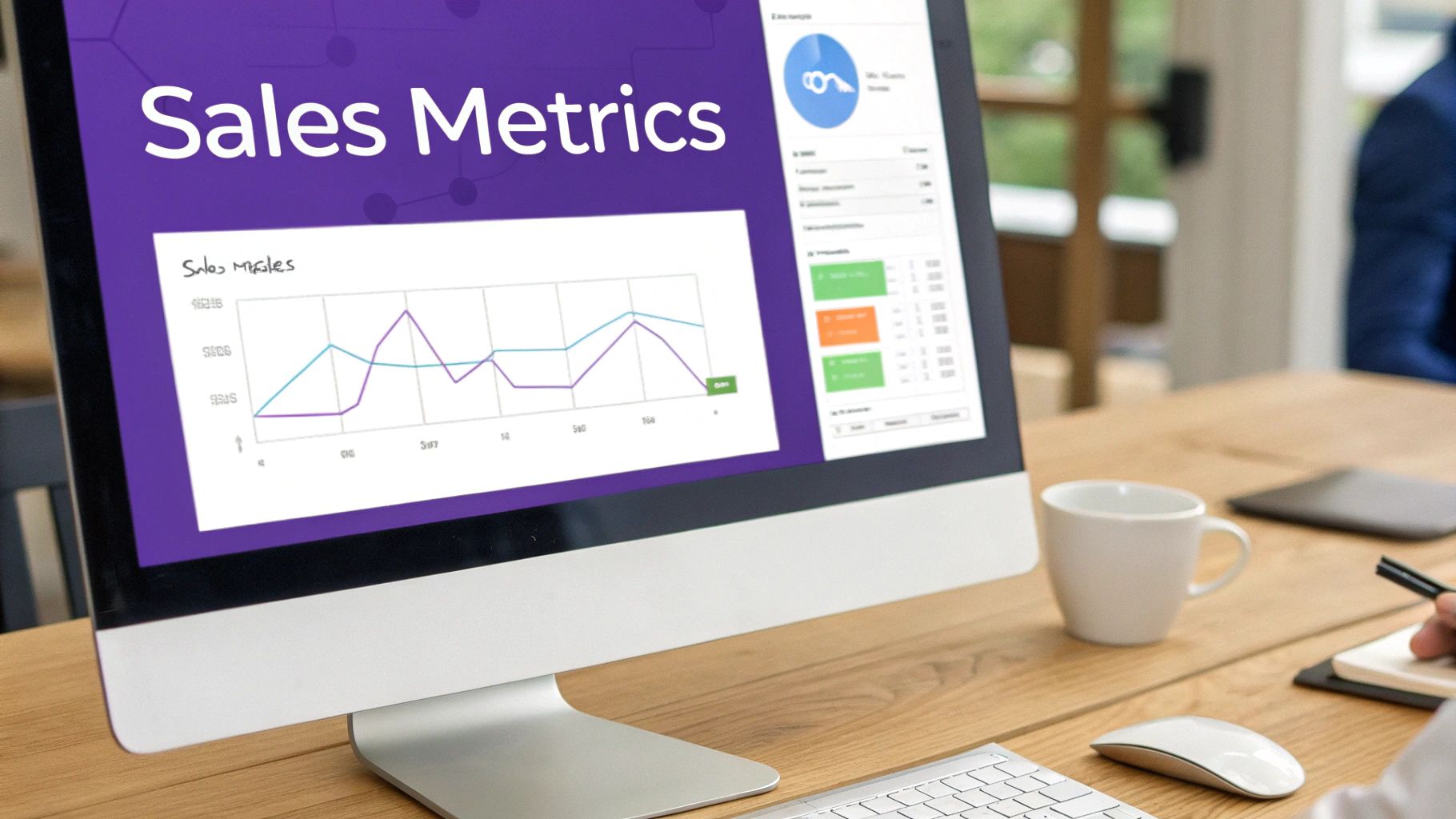
To truly measure and optimize performance, one of the most critical sales enablement best practices is creating a centralized sales metrics and analytics dashboard. This provides real-time visibility into key performance indicators (KPIs), transforming raw data into actionable insights. A well-designed dashboard tracks everything from pipeline health and deal velocity to forecast accuracy and individual rep performance, empowering leaders to make informed decisions and identify coaching opportunities swiftly.
Instead of relying on gut feelings or outdated reports, sales teams can operate from a single source of truth. This data-driven approach allows managers to spot positive trends to replicate or negative patterns to correct before they impact revenue. Platforms like Salesforce Einstein Analytics, HubSpot’s reporting tools, and Microsoft Power BI are purpose-built to aggregate sales data and present it in an easily digestible visual format, making complex analytics accessible to everyone on the team.
How to Implement a Sales Analytics Dashboard
Building an effective dashboard is about focusing on the right metrics and making the data accessible. A cluttered or overly complex dashboard will be ignored, so prioritize clarity and relevance to drive adoption.
- Identify Core Metrics: Start by defining 5-7 core metrics that directly align with your business outcomes. Focus on a mix of leading indicators (e.g., discovery calls booked, demos completed) that predict future success and lagging indicators (e.g., win rate, average deal size) that reflect past performance.
- Establish Data Governance: Ensure data integrity by creating clear rules for data entry in your CRM. Inconsistent or incomplete data will render your dashboard useless. Define who owns which data fields and standardize processes for logging activities and updating opportunities.
- Make it Actionable: Configure your dashboard to be more than just a reporting tool. Set up automated alerts for significant events, like a deal stalling for too long or a rep falling behind on their activity targets. Use weekly team meetings to review the dashboard, discuss trends, and collaboratively brainstorm solutions.
7. Equip Reps with Objection Handling Frameworks and Scripts
A critical sales enablement best practice is to proactively equip your sales team with proven frameworks for managing and overcoming customer objections. Instead of leaving reps to improvise during high-stakes conversations, a structured approach builds their confidence and competence. This involves creating a systematic repository of common objections and well-crafted, empathetic responses that guide the conversation toward a solution rather than a confrontation.
Arming your team with techniques like Sandler’s “Feel, Felt, Found” or reframing methods from The Challenger Sale transforms objections from deal-killers into opportunities for deeper discovery. When a rep can skillfully address concerns about price, timing, or competitors, they demonstrate expertise and build trust. This preparation ensures they can validate a prospect’s concern, reframe the issue, and provide a compelling, evidence-backed counterpoint without sounding robotic or dismissive.
How to Implement Objection Handling Frameworks
Developing a powerful objection handling program goes beyond just writing down a few scripts. It requires a systematic and collaborative effort to build a resource that evolves with your market.
- Crowdsource and Categorize: Begin by analyzing call recordings and CRM notes from lost deals to identify the most frequent objections. Work with top-performing reps to understand how they successfully navigate these conversations. Categorize objections by theme, such as pricing, competitor mentions, implementation fears, or lack of urgency.
- Develop Response Options: For each common objection, provide 3-4 response variations, not just a single script. This encourages natural conversation. Include discovery questions that help uncover the root cause of the objection, ROI-focused data points to justify value, and third-party proof points like case studies or testimonials.
- Train Through Role-Play: Make objection handling a core part of your ongoing sales training. Conduct regular, live role-playing sessions where reps can practice their responses in a safe environment. Record these sessions and share “win” examples to reinforce best practices and build collective knowledge across the team.
By formalizing your approach to objection handling, you empower reps to turn skepticism into conviction, making it a cornerstone of any effective sales enablement strategy. For those looking to create powerful training videos from these role-play sessions, you can learn how Tutorial AI generates professional video tutorials here.
8. Account-Based Selling (ABS) Strategy
Shifting from a wide, lead-based net to a focused, account-based approach is one of the most effective sales enablement best practices for B2B SaaS companies. An Account-Based Selling (ABS) strategy treats individual high-value accounts as markets of one, aligning sales and marketing to deliver highly personalized buying experiences. Instead of generic outreach, every touchpoint is tailored to the specific needs, stakeholders, and pain points of the target account.
This coordinated effort ensures that sales resources are concentrated on accounts with the highest revenue potential and best fit for your solution. By orchestrating communication and delivering relevant insights to multiple decision-makers simultaneously, ABS accelerates the sales cycle and increases deal size. Platforms like Demandbase, 6sense, and Terminus are built to power these sophisticated strategies, using data to identify in-market accounts and coordinate targeted engagement across channels.
How to Implement an Account-Based Selling Strategy
Successfully launching an ABS program requires tight alignment and a data-driven mindset. Follow these steps to build a scalable and effective ABS motion that drives significant revenue growth.
- Define Your Ideal Customer Profile (ICP): Start by identifying the firmographic and technographic characteristics of your best customers. Use this data to create a scoring model that ranks potential target accounts based on their fit, revenue potential, and strategic value.
- Align Sales and Marketing: True ABS success hinges on a unified front. Hold joint planning sessions to select target accounts, map out key stakeholders within those accounts, and develop integrated campaign playbooks. Both teams must agree on shared goals and metrics, such as account engagement and pipeline velocity.
- Personalize Content and Outreach: Generic messaging will fail. Equip your sales team with personalized assets for each target account, such as custom demo videos, industry-specific case studies, or ROI calculators. Use intent data to time outreach perfectly, engaging accounts when they show active buying signals. Coordinate multi-threaded outreach to build consensus across the buying committee.
9. Sales Onboarding and Ramp Programs
A world-class sales team is built, not born, making a structured onboarding and ramp program a cornerstone of any effective sales enablement strategy. This process is far more than a simple product-training week; it’s an accelerated, comprehensive program designed to bring new sales hires to full productivity as quickly and efficiently as possible. It strategically combines formal training, mentorship, and real-world application to ensure new reps master the product, internal processes, and company culture simultaneously.
This foundational practice ensures that every new hire builds the competence and confidence needed to engage customers effectively. By defining a clear path to success, you reduce the anxiety of a new role and standardize the core skills that lead to quota attainment. Companies like Salesforce and HubSpot have perfected this model, creating scalable programs that consistently produce high-performing reps by focusing on incremental learning and measurable progress from day one.
How to Implement Sales Onboarding and Ramp Programs
Building a successful program requires a blend of structured curriculum, practical application, and cultural immersion. Avoid simply handing a new rep a playbook; instead, guide them through a well-defined journey.
- Create a Structured Curriculum: Develop a detailed 30-60-90 day plan that outlines specific learning milestones, activities, and performance expectations. Combine self-paced learning modules with live classroom sessions covering product knowledge, buyer personas, sales methodology, and tool proficiency.
- Assign Engaged Mentors: Pair new hires with a seasoned, high-performing rep who serves as a dedicated mentor. This peer relationship provides a safe space for asking questions, shadowing live calls, and getting practical advice that isn’t found in a training manual.
- Measure Early and Often: Track key ramp metrics like time-to-first-deal, activity levels, and early-stage pipeline creation. Use weekly check-ins and knowledge assessments to identify areas where a new rep might be struggling and provide targeted coaching before they fall behind.
A well-executed onboarding program is one of the most vital sales enablement best practices, directly impacting long-term revenue and employee retention. To explore this topic further, you can find more guidance on building an effective program by learning about employee onboarding best practices here.
10. Content Personalization and Dynamic Sales Collateral
Moving beyond one-size-fits-all sales materials is one of the most critical sales enablement best practices for engaging modern buyers. A technology-enabled approach to dynamic content allows reps to deliver customized collateral based on buyer stage, industry, company size, and individual prospect needs. Instead of generic pitch decks, reps can present messaging, case studies, and proof points that adapt in real-time to specific buyer contexts, making every interaction highly relevant and impactful.
This level of personalization demonstrates a deep understanding of the prospect’s unique challenges and goals. When a seller can instantly assemble a smart pitch with the right customer stories and data points for a specific vertical, they build credibility and accelerate the sales cycle. Platforms like Seismic, Highspot, and HubSpot’s dynamic personalization features are built to facilitate this, transforming static content into powerful, tailored buying experiences that resonate with prospects and drive decisions.
How to Implement Content Personalization
Successfully rolling out a dynamic content strategy requires more than just technology; it needs a well-planned content architecture and a commitment to data-driven refinement. Follow these steps to get started.
- Build a Modular Content Library: Break down your core assets like presentations and proposals into smaller, reusable components or “modules.” Tag each module by relevant criteria such as industry, persona, pain point, or product feature. This allows your sales enablement platform to dynamically assemble the most relevant pieces for any given scenario.
- Start with High-Impact Scenarios: Don’t try to personalize everything at once. Identify the most common and highest-value selling situations, such as a first call with a specific buyer persona or a competitive bake-off in a key industry. Focus your initial personalization efforts on creating tailored content flows for these critical moments.
- Establish a Feedback Loop: Systematically track engagement and conversion metrics for your personalized content. Use this data to understand what resonates and what doesn’t. Create a formal process for sales reps to provide feedback on content effectiveness, ensuring your materials are continuously improving based on real-world results.
By personalizing content at scale, you empower sellers to have more meaningful conversations and close deals faster. To further refine your outreach, you can learn more about crafting targeted marketing communication here.
10-Point Sales Enablement Best Practices Comparison
| Initiative | 🔄 Implementation Complexity | ⚡ Resource Requirements | 📊 Expected Outcomes | 💡 Ideal Use Cases | ⭐ Key Advantages |
|---|---|---|---|---|---|
| Implement a Centralized Sales Enablement Platform | High — integrations, governance, change mgmt | High — licensing, IT, content owners | Faster ramp, consistent messaging, content ROI visibility | Large/distributed sales orgs with many assets | Single source of truth; searchable content; analytics |
| Sales Coaching and Continuous Skill Development | Medium‑High — ongoing program design | High — manager time, coaching tools, recordings | Gradual, measurable rep performance uplift | Complex/consultative sales and high‑variance reps | Personalized skill growth; stronger manager‑rep ties |
| Sales and Marketing Alignment (Smarketing) | Medium — cultural change, SLAs | Medium — shared tools, joint processes | Better lead quality, higher conversion, predictable revenue | Organizations with separate sales & marketing teams | Unified messaging; reduced waste; shared goals |
| Competitive Intelligence and Battle Cards | Low‑Medium — setup and update cadence | Medium — research resources, content upkeep | Improved win rates vs competitors; faster rebuttals | Competitive, evaluation‑heavy buying cycles | Quick reference for reps; consistent competitive positioning |
| Persona‑Based Sales Playbooks | Medium — research and mapping | Medium — persona research, content creation | More relevant conversations; higher persona conversion | Segmented markets with repeatable buyer types | Tailored talk tracks; faster qualification; consistency |
| Sales Metrics and Analytics Dashboard | Medium‑High — data cleanup, integration | High — BI tools, data engineering, governance | Better forecasting, proactive coaching, trend visibility | Data‑driven sales ops and scaling teams | Real‑time KPIs; exception management; strategic insight |
| Objection Handling Frameworks and Scripts | Low‑Medium — cataloging + training | Low‑Medium — content, role‑play time | Reduced call anxiety; higher close rates in objections | New reps and high‑objection product sells | Consistent responses; faster objection resolution |
| Account‑Based Selling (ABS) Strategy | High — cross‑functional coordination | High — research, personalized content, tooling | Larger deal sizes, deeper retention, higher ROI | Enterprise, strategic accounts with long cycles | Focused ROI; multi‑threaded engagement; deep customization |
| Sales Onboarding and Ramp Programs | Medium‑High — curriculum & mentor programs | High — trainers, mentors, structured time | Faster time‑to‑quota; lower early turnover | Rapid growth hiring and high churn risk teams | Repeatable ramp; measurable milestones; improved retention |
| Content Personalization and Dynamic Sales Collateral | High — personalization engine & content ops | High — content production, platform integration | Higher engagement and conversion; tailored buyer journeys | Diverse buyer segments and high‑value deals | Dynamic, relevant messaging at scale; better engagement |
From Strategy to Execution: Making Enablement a Core Business Function
Navigating the landscape of modern sales requires more than just a talented team; it demands a strategic, interconnected system designed to empower every seller. Throughout this guide, we’ve explored ten critical sales enablement best practices, moving from foundational elements like centralized platforms and robust onboarding to advanced strategies such as account-based selling and dynamic content personalization. Each practice represents a vital cog in a machine built for revenue growth, operational efficiency, and sustained competitive advantage.
The common thread weaving these strategies together is a fundamental shift in mindset. True sales enablement is not a series of one-off projects or a siloed department. It’s an ongoing, iterative process that transforms enablement into a core business function, deeply integrated with sales, marketing, and product development. It’s about creating an ecosystem where sellers are consistently equipped with the right knowledge, content, and tools at the precise moment of need.
Key Takeaways for Lasting Impact
As you move from reading to implementation, focus on these overarching principles to ensure your efforts deliver tangible results:
- Empowerment Over Mandates: The most effective enablement initiatives feel less like top-down directives and more like indispensable resources. Focus on providing value that sellers actively seek out, from persona-based playbooks that simplify complex deals to battle cards that build confidence against competitors.
- Data is Your Compass: Gut feelings have their place, but scalable success is built on data. By implementing a comprehensive metrics dashboard, you move from guessing what works to knowing what works. This data-driven approach allows you to refine coaching, optimize content, and allocate resources with precision.
- Consistency Breeds Excellence: From the first day of onboarding to a veteran’s coaching session, consistency in your frameworks, messaging, and processes is crucial. A standardized objection handling framework or a unified Smarketing SLA ensures every team member is aligned and executing with clarity.
Bridging the Content Gap with Technology
One of the most significant challenges in executing these sales enablement best practices is the creation of high-quality, personalized content at scale. This is especially true for video content like product demos, tutorials, and onboarding materials. Your subject matter experts hold the key knowledge, but they aren’t video editors.
This is where AI-powered tools become a game-changer. Tutorial AI specializes in generating professional video tutorials based on simple screen recordings. It addresses the common bottleneck where easy-to-use recording tools like Loom produce raw footage that is 50-100% longer than necessary, while professional editing software like Camtasia or Adobe Premiere Pro requires expert knowledge. Tutorial AI’s tools let your subject matter expert speak freely without any practice, and the AI will still produce a video that looks as if it was edited in Adobe Premiere Pro. This allows the expert to efficiently create a wide range of on-brand videos—including demos, onboarding videos, explainer videos, feature releases, knowledge base videos, and support article videos—with unmatched speed.
Implementing a strategic sales enablement function is a journey, not a destination. By embracing these best practices and leveraging technology to overcome common hurdles, you are not just supporting your sales team; you are building a resilient, adaptable revenue engine that will drive your organization’s growth for years to come.
Ready to supercharge your sales content creation and eliminate video production bottlenecks? See how Tutorial AI uses AI to automatically transform your raw screen recordings into polished, professional video tutorials in minutes. Visit Tutorial AI to learn more and get started.